Autor: Jakub Karlec
Discussion: Join the conversation on LinkedIn
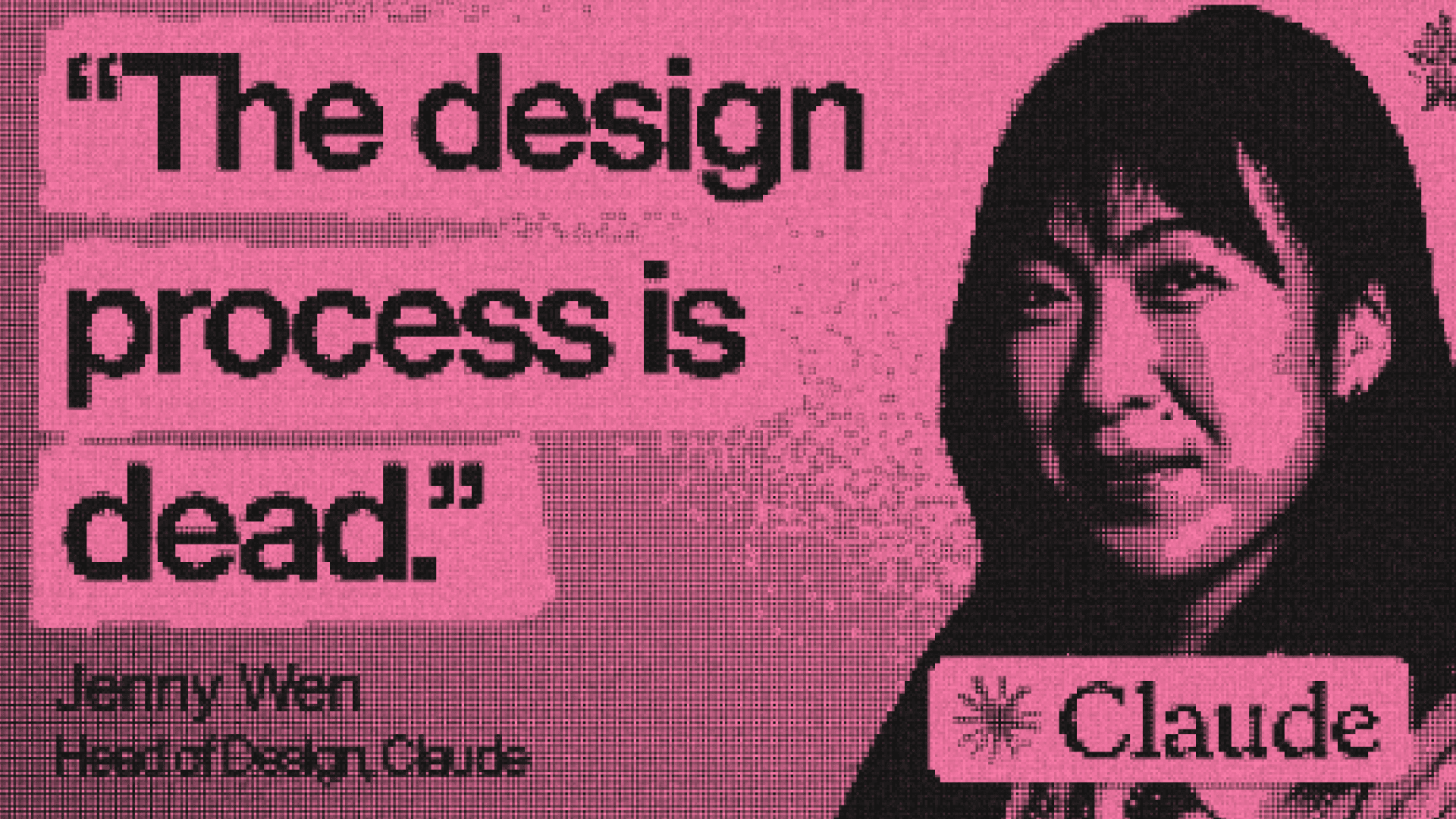
On Lenny's Podcast, Jenny Wen said the classic design process is dead. She was referring to design thinking and the double diamond framework. Her hot take got a lot of traction, but I believe it is based on a misunderstanding of what a design process actually is.
Jenny argues that thanks to AI, designers work faster. They do not need to spend months on research or detailed prototypes. Because of this, she claims the old process is obsolete.
But the design process has never been about doing things slower. It is a mindset. It is good to think before you build. It is good to understand the domain, the user needs, the constraints and the risks. The faster you do that, the better. AI simply speeds up the execution. The process itself is still valid. You still need it to build the right thing. The process gives you a repeatable structure that you can follow and IMPROVE.
Jenny actually admits she still does the same things as before. She just has a wider range of tools to speed up her work and work closer to engineers. That is great, but it is not the death of the process.
Her view makes perfect sense when you look at her focus. She mentioned that a few years ago, she spent 70% of her time prototyping, 20% working with engineers, and 10% on coordination. That is pure delivery work. She is heavily focused on the SECOND part of the double diamond.
This is where listening to this kind of talk gets tricky. If we reduce the design process to pure delivery, we are focusing on the exact part that AI will mostly automate. Teams will shrink and people will lose jobs if they only focus on execution. If you are a designer who covers the whole process, including discovery, you will be much better off.
Even Jenny admits that the hardest part of building a product is not designing the UI, but deciding what to ship and what to cut. Making decisions. She also notes that AI agents will get better at taste and craft. I agree, so we shouldn't get too attached to it. Yet, when she describes her own work, it’s about taste and craft and feelings, there is almost zero focus on the strategic part of design.
Design needs smart, new influential voices. But I would love them to focus on the skills that will matter in the future, not the tasks AI is about to automate.
I am probably old fashioned… Formed by design leaders like Don Norman, Andy Budd or the people at Adaptive Path, who talked heavily about strategy. Yes, they dealt with craft and technical details. But they promoted design by explaining its value to the business, not just by finding ways to ship nice buttons faster.
(And I’m actually a little worried by how the word "craft" is used mostly for visual design, but design craft is actually more about understanding what your users need and how to talk to them, rather than setting the right border radius.)
What’s your take on this? Join the discussion on LinkedIn and let us know what you think.
📚 Context & Further Reading
Listen: Lenny’s Podcast: The design process is dead – Jenny Wen (Claude): The interview that sparked this discussion.
Explore: Design for a Better World by Don Norman: A deep dive into the strategic value of design by one of the industry's founders.
Read: Andy Budd: From Chess to Poker: An article on how speed and AI are changing our traditional design processes.